

MYCOmmunity - Applied Mycology and Learning Lab
Powered by
Past events
All events
Past events
Apr
30
2022
Past Event
Sydney Myco Group
18:00 – 20:00
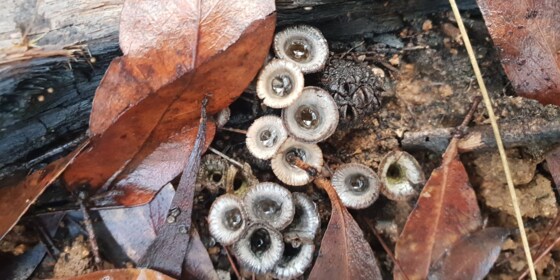
We have a number of members and supporters living in Sydney and are wanting to see if there is interest in having a local meetup or forming a local group. If you are interested please sign up below and we will contact you.
Apr
30
2022
Past Event
Macedon Fungi Foray (April 30)
Macedon
12:00 – 14:00
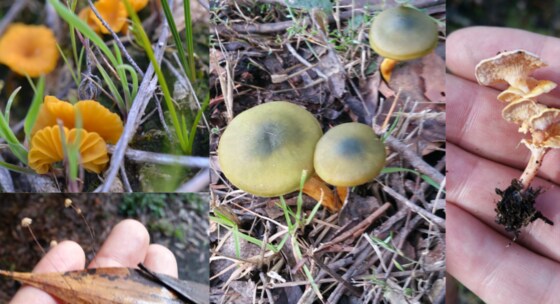
Join us for a fungi foray! Greg Boldiston has extensive experience in identifying mushrooms and runs regular mushroom walks in Mt Macedon. This foray will focus on identifying fungi in native forests and you will also learn to record them for conservation purposes using the iNat app. Exact location to be announced closer to the day. Please wear weather appropriate clothing and sturdy footwear.
All proceeds of this foray go to support the Wild Fungi DNA project https://myco.org.au/wild-dna-project/
Mar
30
2022
Past Event
Gardening Australia Fungi Friendly Gardening (NEW TIME)
18:30 – 19:30
Sapphire McMullan-Fisher will be on Gardening Australia Friday March 25 discussing fungi friendly gardening. View the show then join us after for a Q and A with a panel mycologists and gardeners.
All donations go to Fungi for Land. Fungi for Land is bringing together a team of international and Australian experts on land management, conservation, and fungal ecology, we are creating Australia’s first book on practical land management harnessing the mysterious mycological kingdom. https://fungi4land.com
Speakers:
Sapphire McMullan-Fisher
Sapphire is an ecologist who has special interest in the conservation of biodiversity, particularly the macrofungi and mosses.
She has been active with Australian scientific groups like the Australian Network for Plant Conservation, Australian Bryophyte Workshops, Education Subcommittee of the Australasian Mycological Society, and numerous community groups including many fungi groups, field naturalist clubs and Landcare groups. She is involved in Greening Australia’s Habitat Conservation and Management Course and the new Victorian Nature Stewards program. To read more about her research profile in Research Gate and LinkedIn.
Having lived in four states and traveled across Australia’s landscapes she has been involved in many of the fungal community groups over the years. She particularly enjoys getting out into the bush to discover fungal treasures as often as she can.
Gold Tufts (Cyptotrama asprata, left) is Sapphire’s favourite fungus. It is delightful from the baby cushion tufts to the mushrooms with their pure white gills.
Roz Hart
Roz is an ecologist with a range of working experience from teaching Microbiology at the University of WA to running an Environmental Consulting Business with her husband Ray.
More recently she worked as the Community Education officer with Mycologist Dr Neale Bougher on the Perth Urban Bushland Fungi project in WA, a project that raised awareness of the importance of fungi in bushlands, concentrating on Urban bushlands and opening many people’s eyes to the wonders of fungi.
She lives in Perth, close to Kings Park which is Perth’s iconic bushland park. Roz enjoys being a volunteer Guide at Kings Park, where she encourages and educates other guides and the public about the importance of fungi in the bushland.
She loves bushwalking and exploring all over Australia and New Zealand looking for fungi, constantly learning more about our amazing Biodiversity, which she knows comprises at least 3 Fs: Fauna, Flora and Fungi!
Tasha Nichols
Tash Nicholls is happiest when outdoors. Besotted with the natural world from a young age, growing up exploring the coast lines and bushland of the Mornington peninsula, it makes sense that foraging for and growing her own food has grown from a passion to a career. Tash runs a small scale suburban micro-farm, Margaret's Mushrooms, is a keen citizen scientist, volunteers with MYCOmmunity and supports Fungi for Land, FunFungi Ecology, Fungimap Australia, Australian Food Sovereignty Alliance, Open Food Network and the Australasian Mycological Society. She also works part time as a lab tech for national supplier of fungi culture and spawn, Australian Mushroom Supplies.
Ema Corro
Ema Corro loves everything about fungi and is always amazed by their ability to increase people’s sense of connection with the natural world. She believes that the best way to protect the environment is to involve the community in all aspects of science and conservation. She is President of MYCOmmunity Applied Mycology which is an organisation that aims to raise awareness of the importance of fungi in health, sustainability and the environment, as well as providing scientific training and resources to the community. She is also project leader on the Wild Fungi DNA project which is developing environmental DNA techniques that citizen scientists can use to search for rare and endangered fungi. She has also researched using waste to produce sustainable mycelium-based construction materials
Feb
28
2022
Past Event
Ballarat Myco meetup?
2022-02-28 18:00 – 2022-04-28 20:00
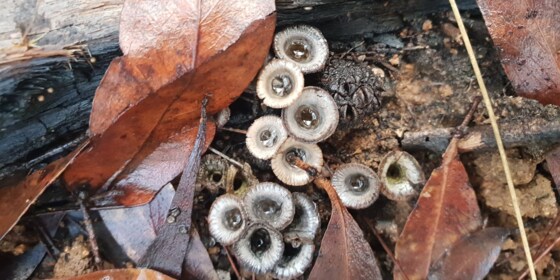
We have a number of members and supporters living in Ballarat at the moment and are wanting to see if there is interest in having a local meetup. If you are interested please sign up below and we will contact you later to arrange a time and place.
Feb
26
2022
Past Event
EOI Mycelium Lab
11:00 – 13:00
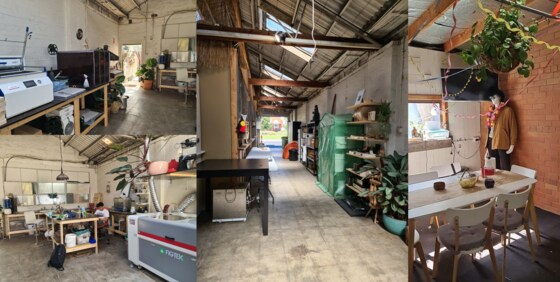
MYCOmmunity has recently opened up it's new space in Thornbury, Mycelium Lab. The lab is spaceous and well equipped with mushroom growing and culturing equipment such as a flow hood, autoclave, pressure cookers etc. We also have general equipment used in the biological sciences including microscopes and equipment for DNA extraction and sequencing.
We are considering having regular open hours with a paid lab membership if there is enough interest. If you are interested please use the EOI "ticket" below and fill in the questions. If you want more info please feel free to email us at mycommunity@myco.org.au
Feb
11
2022
Past Event
MYCOmmunity social night
439 St Georges Rd
17:00 – 20:00
Two years of restrictions and lockdowns have made it hard to meet up with MYCO members and volunteers in person. To make up for that, in 2022 we are hoping to have regular social nights. It will be an opportunity to talk fungi and also see the new lab. Let us know if you are interested in attending.

Feb
04
2022
Past Event
Vicbiocon stall
2022-02-04 17:00 – 2022-02-05 12:58
Feb
03
2022
Past Event
Full Myco Course (online)
2022-02-03 18:00 – 2022-04-28 19:30
This online course will cover the fundamentals of mycology, identifying and cultivating fungi, human uses for fungi and land management with fungi. Lessons will be pre-recorded and learners will have a weekly opportunity for live Q and A on Thursday evenings from 6:30pm. There will also be an online forum where people can ask questions or discuss topics. The course goes for 12 weeks starting Thursday February 3.
Anyone from any state is welcome to sign up to the course using the non-ACFE tickets.
We are running the course together with our partner organisation Haddon Community Learning Centre to provide limited discount ACFE funded places for adult learners, in order to qualify for a place you must:
Over 16
Not attending school
Living in Victoria
Agree to fill in the form and provide a Medicare number (as proof of ID)
If you don't qualify for an ACFE funded place you are still welcome to sign up with any other ticket.
Units covered in this course:
Mycology 101
This module covers the fundamental aspects of mycology
Fundamentals of biology including cell structure and introduction to genetics and evolution
Fungal diversity and different types of fungi
How to identify fungi
How fungi interact with other organisms and roles of fungi in the ecosystem
Biosecurity including field hygiene and managing invasive species
Human uses for fungi and growing fungi
This module will cover human uses for fungi including
Mushroom cultivation
Growing mushrooms at home and setting up your own lab
Safe and ethical foraging
Fungi in brewing
Fungi in culture and history
Emerging industries such as myco-materials
Guest speaker Natasha Nichols (Margaret’s Mushrooms) on medicinal fungi
Fungal conservation, land-management and citizen science
This module is focussing on fungi in the environment and how you can contribute as a citizen scientist
Endangered fungi and fungal conservation
How citizen scientists can contribute to fungal conservation
How to survey fungi for scientific purposes
Re-introducing fungi to the environment
Biosecurity and invasive species management
Using DNA technology
DIY science and setting up your own lab
Guest speaker Sapphire Mc Mullan-Fisher on fungi in land management
Wrap up session
Further education pathways
Getting jobs in land management and agriculture
Starting your own business
Getting involved in voluntary groups
If you are interested in just doing part of the course please contact mycommunity@myco.org.au
Your teachers:
Caine Barlow is a Mycologist and Fungi Educator. He gives regular talks on mycology, fungi conservation, and teaches gourmet mushroom cultivation. Caine started foraging for mushrooms in the early 1990's, and started cultivating gournet fungi in the mid 2000's. He did his Bachelor of Science at the University of Tasmania, and a Master of Science at the University of Melbourne where his research project was based around Conservation Mycology.
Ema Corro has a Bachelor of Applied Science from RMIT and has researched mycomaterials in her honours project. She has been growing and foraging for mushrooms for 7 years. She is coordinator of MYCOmmunity Applied Mycology as well as the Wild Fungi DNA project which is developing environmental DNA techniques that citizen scientists can use to search for rare and endangered fungi.
We also have guest lectures by experts in fungi in land management, medicine and mycomaterials.
Feb
01
2022
Past Event
Biofabrication and myco-materials
2022-02-01 18:00 – 2022-05-09 17:30
Biofabrication and recycling with fungi
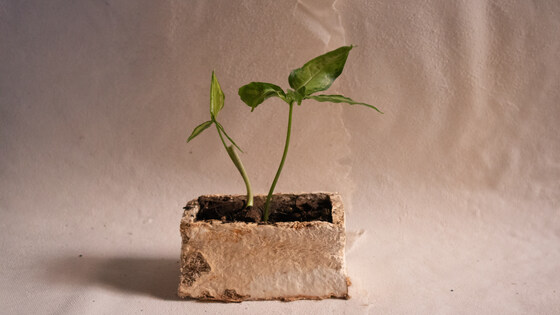
Biofabrication is a rapidly growing industry that aims to replace plastics and other unsustainable materials with renewable and biodegradable materials. This mixed-delivery course will cover everything you need to know to get started in the industry. It includes the fundamentals of mycology, cultivating fungi, laboratory work with fungi and biofabrication of sustainable materials. The course has 10 hours of theoretical components, 10 hours of practical components on general laboratory work and growing fungi and a further 10 hours of practical components focussing specifically on biofabrication.
We are running this course together with our partner organisations Haddon Community Learning Centre and myco-materials company Fungi Solutions. You will get an opportunity to work in a laboratory that produces many different types of myco-materials for professional clients.
Theory component:
Every Tuesday at 6pm from February 1 – April 5
Practical component (at Fungi Solutions in Thornbury):
12pm-4pm Saturdays February 12th and 26th, March, 12th and 26th and April 9th
Ten funded places are available for people who are:
Over 16
Not attending school
Living in Victoria
Agree to fill in the ACFE form and provide a Medicare number (as proof of ID)
Course fee: $200 (including course and amenities fees)
Payment plans can be arranged if need be. For more info contact mycommunity@myco.org.au
Your teachers:
Amanda Morgan is founder and Director of Research at biofabrication company Fungi Solutions. She studied design at RMIT and has an Honours in mycomaterials. At Fungi Solutions we believe that collaborative partnerships, supporting community outcomes and careful custodianship of our delicate natural resources is the best way to care for the land and people. We would like to deepen our relationship with country and ensure that our mission to produce clean circular material solutions is conducted with respect for and in consultation with indigenous regenerative practices.
Ema Corro has a Bachelor of Applied Science from RMIT and has researched mycomaterials in her honours project. She has been growing and foraging for mushrooms for 7 years. She is coordinator of MYCOmmunity Applied Mycology as well as the Wild Fungi DNA project which is developing environmental DNA techniques that citizen scientists can use to search for rare and endangered fungi.
Jan
31
2022
Past Event
Wild Fungi DNA volunteers training
2022-01-31 18:00 – 2022-04-28 19:30
This mixed-delivery course is intended for people who want to volunteer on the Wild Fungi DNA project. The course is mixed delivery, with theoretical components happening online, labwork happening at Mycelium Lab in Thornbury and fieldwork happening in Wombat State Forest. The aim is to train up a group of committed volunteers who can then assist with the project and also help train other volunteers.
There are places available for the field and lab components which are being funded by ACFE through our partner organisation Haddon Community Learning Centre as well as through an equipment grant from the Australian Citizen Science Association. Signing up for this part is conditional on making a commitment to continue volunteering with the project in future. There are extra place for people who just want to take part in the online component. As part of this course you will learn:
An introduction to fungal ecology and conservation
Basic laboratory techniques
Microscopy
Laboratory and field work OH&S
How to use citizen science tools such as iNaturalist
How to identify fungi
How to collect fungi for herbarium specimens
How to collect fungi for DNA
How to extract, amplify and sequence DNA samples
How to take cultures of fungi and manage collections
Theory sessions (online):
6pm-7:30pm February 14th and 25th, March 14th and 28th, April 4th, 11th and May 25th and 23rd
Laboratory work:
Saturday 12pm-4pm February 5th, 19th, March 5th and April 2nd
Field work:
10am-6pm May 14th and 15th
Ten ACFE fully funded places are available for people who are:
Over 16
Not attending school
Living in Victoria
Agree to fill in the form and provide a Medicare number (as proof of ID)
Commit to volunteering on the Wild Fungi DNA project after the course
As there are only limited spaces we ask people to explain a little bit about who you are and why you want to volunteer. While there are only limited places at the moment, we want everyone to be able to volunteer and if people miss out this time we will endeavour to provide future training opportunities. If you sign up but then aren't able to attend, please let us know so we can open up spaces for other people.
Nov
03
2021
Past Event
Agaricus in our backyard
18:30 – 19:30
Online talk
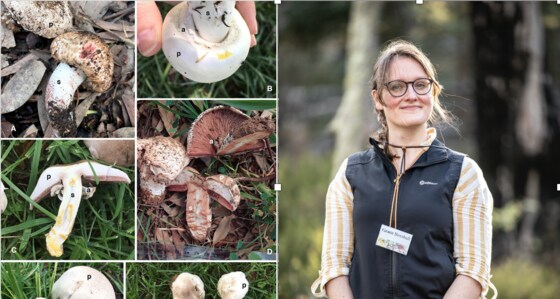
Agaricus, also known as the field mushroom genus, is one of the more iconic fungi genera. It’s easy to recognise, and readily found on supermarket shelves, or growing wild in parks, gardens, paddocks, and even out in the bush. Agaricus mushrooms conjure memories of mushrooming in paddocks as a child- or even foraging today as an adult! You may have vividly queasy recollections of becoming unwell after accidentally ingesting the infamous Yellow Stainer, Agaricus xanthodermus.
But what do we really know about the Agaricus growing in our backyard?
We estimate that there are >500 species of Agaricus all over the world, but Australian Agaricus remain virtually unknown in the global understanding of the genus. Of the 37 species listed as occurring in Australia, only 13 are fully described native species. That number is likely only a small fraction of Australia’s Agaricus biodiversity. In this talk, Grace will discuss her research on Agaricus to date- including the results of her recent publication on Agaricus xanthodermus toxicity, and the research she is currently undertaking on Australasian Agaricus diversity and evolution.
Grace Boxshall is a young, Australian mycologist whose main interest is the taxonomy and the evolutionary history of Australasian fungi. Grace started off her journey with a Bachelor of Science (Plant Science) from the University of Melbourne but was inoculated with a fungi fascination during her final semester internship with Dr Teresa Lebel at the Royal Botanic Gardens Victoria in 2018. From that internship, Grace embarked upon a Master of Science (BioSciences) at the University of Melbourne supervised by Drs T. Lebel and Joanne Birch. For her research project, she employed both chemical and phylogenetic analyses to investigate the toxicity variation in a poisonous species Agaricus xanthodermus, the Yellow Stainer, which closely resembles edible field- and button mushrooms. During this time, Grace founded FungiSight, the then-Facebook page (www.facebook.com/fungisight) dedicated to sharing her research and helping her locate her target species as it popped up. FungiSight now spans Instagram, iNaturalist, and Facebook with a following of >1900.
Now in 2021, Grace has returned once again to the University of Melbourne and is one year into her PhD studying the evolutionary history, biogeography, and taxonomy of the field mushroom genus Agaricus in New Zealand and east coast Australia. Grace has also recently published the results of her master’s research in international journal Mycologia (available free here: https://www.researchgate.net/publication/354452380_A_field-based_investigation_of_simple_phenol_variation_in_Australian_Agaricus_xanthodermus). Grace is currently seeking observations of Agaricus mushrooms particularly in native bush or non-urban east coast Australia.
All profits go to the Wild Fungi DNA Project
Oct
17
2021
Past Event
Full Myco Course Sundays
2021-10-17 14:00 – 2021-12-12 17:30
This online course will cover the fundamentals of mycology, identifying and cultivating fungi, human uses for fungi and land managment with fungi. Classes will be live and recorded for people to re-watch later.
The course goes for 9 weeks on Sunday from 2pm to 5:30pm (with time for a break)
We are running the course together with our partner organisation Haddon Community Learning Centre to provide limited discount ACFE funded places for adult learners looking at changing careers or going on to further education. If you sign up for one of these places we will email you the the funding forms which must be filled out before the course starts. We can assist you with filling them out if you encounter any problems. In order to qualify for ACFE funding you must be:
Over 16
Not attending school
Living in Victoria
Agree to fill in the form and provide a Medicare number (as proof of ID)
Units covered in this course:
Mycology 101
This course covers the fundamental aspects of mycology
Fundamentals of biology including cell structure and introduction to genetics and evolution
Fungal diversity and different types of fungi
How to identify fungi
How fungi interact with other organisms and roles of fungi in the ecosystem
Biosecurity including field hygiene and managing invasive species
Guest speaker
Human uses for fungi and growing fungi
This course will cover human uses for fungi including
Mushroom cultivation
Growing mushrooms at home and setting up your own lab
Safe and ethical foraging
Fungi in brewing
Fungi in medicine
Fungi in culture and history
Emerging industries such as myco-materials
Fungal conservation, land-management and citizen science
This is a more advanced course focussing on fungi in the environment and how you can contribute as a citizen scientist
Endangered fungi and fungal conservation
How citizen scientists can contribute to fungal conservation
How to survey fungi for scientific purposes
Re-introducing fungi to the environment
Biosecurity and invasive species management
Fungi in land management and agriculture
Using DNA technology
DIY science and setting up your own lab
Wrap up session
Further education pathways
Getting jobs in land management and agriculture
Starting your own business
Getting involved in voluntary groups
